What Google’s $15 B AI Hub in Visakhapatnam (Andhra Pradesh) Means for India
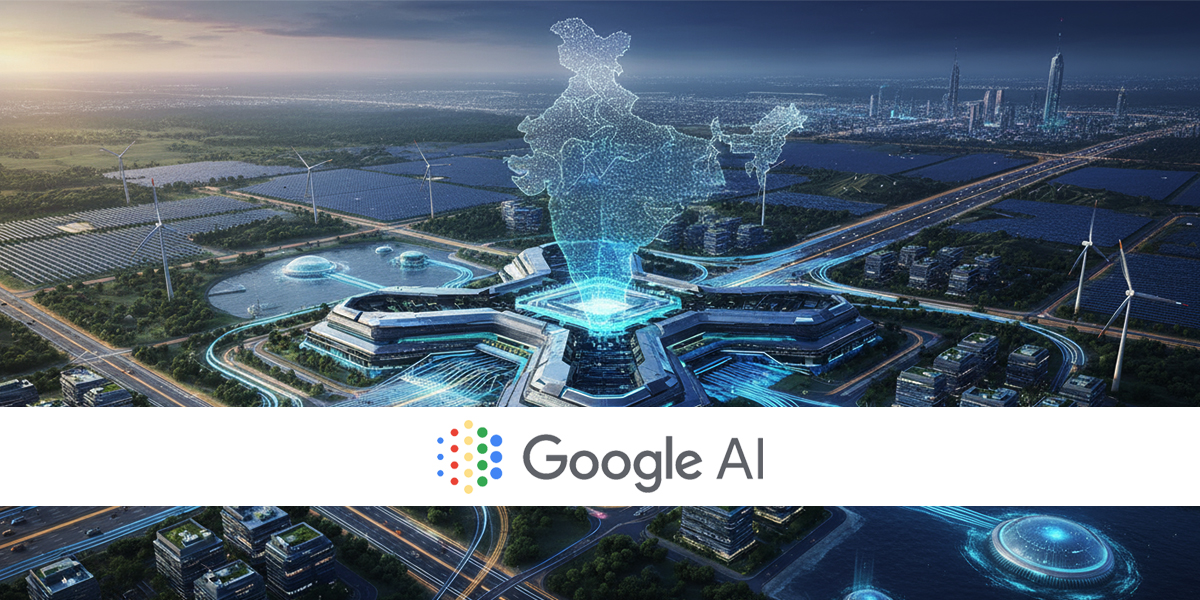
In a landmark announcement, Google has committed to invest approximately US $15 billion over the next five years (2026-2030) to build its first major Artificial Intelligence (AI) hub in India – located in Visakhapatnam, Andhra Pradesh. This is not just another tech investment. It carries huge implications – for India’s digital economy, its place in the global AI race, regional development, infrastructure norms, and thousands of businesses and jobs across the value chain. Here’s an expanded exploration of what this means.
The Big Picture: Rise of India as an AI Hub
The project will be Google’s largest investment in India to date, and its largest AI infrastructure project outside the United States.
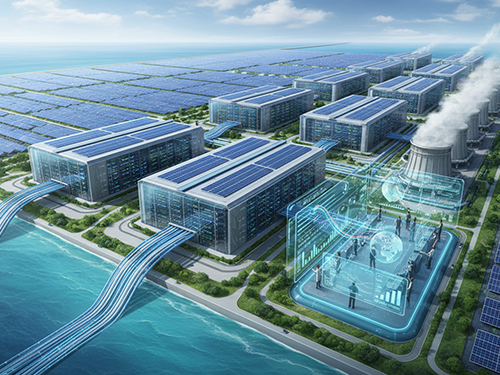
The hub will include a gigawatt-scale data centre, a new international subsea cable landing gateway, vast fibre-optic network expansion, and clean energy infrastructure.
The location: Visakhapatnam, in Andhra Pradesh – signalling that India’s large tech-investments are shifting beyond traditional metro hubs.
This signals that India is no longer merely a consumption market but is being built into a core node of global infrastructure – power, compute, connectivity – for AI and digital services.
What It Means for India: 5 Key Impacts
1. Technology and Innovation Leap
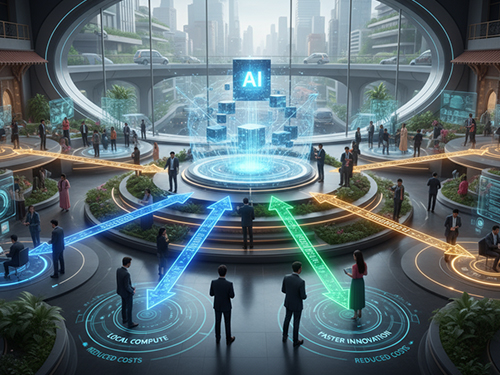
With this infrastructure in place, Indian startups, MSMEs, research institutions and tech teams will benefit from local access to world-class AI compute, data-centre capacity, and connectivity. Rather than relying on overseas servers or high-latency links, services can be developed, deployed and scaled from within India. This lowers time-to-market and cost for innovation.
2.Job Creation and Ecosystem Growth
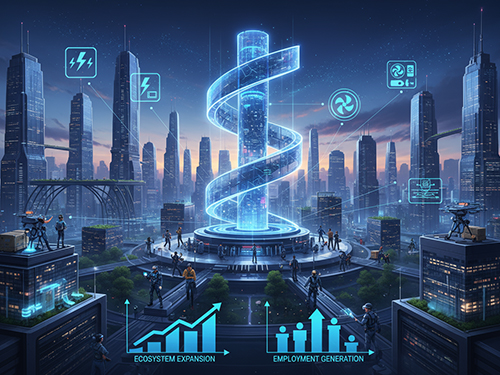
The hub is estimated to generate hundreds of thousands of jobs (both direct and indirect). For Andhra Pradesh and surrounding regions, this means new demand for skills in data-centres operations, networking, power systems, AI engineering, app development, logistics and maintenance. Additionally, this will create an entire ecosystem – suppliers of servers, cooling units, power-grid components, fibre-optics, subsea cable landing – opening opportunities for domestic manufacturing and services.
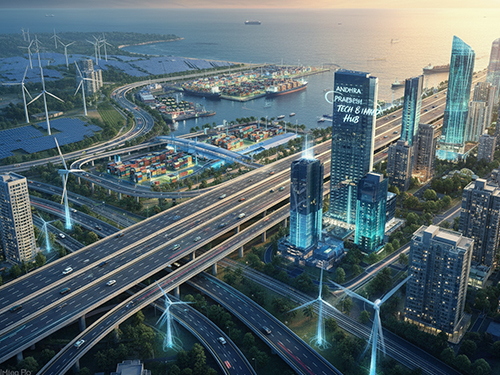
3. Regional Development & Infrastructure Upgrade Locating such a project in Visakhapatnam means infrastructure – power supply, renewable generation, energy storage, fibre connectivity, logistics – will receive a major boost. The ripple effects go beyond the hub: local businesses, education centres, manufacturing clusters will benefit. This also signals a shift: States willing to build the required infrastructure and policy-backing will gain large investments, helping reduce regional imbalance.
4. India’s Strategic Role in Global AI Supply-chain By hosting a global tech giant’s major AI hub, India becomes a strategic node in global compute and cloud infrastructure. This gives Indian businesses and consumers better access to services and reduces dependence on foreign-based servers. It also increases India’s bargaining power in global tech supply chains, fosters deeper partnerships, and aligns with national initiatives such as “Digital India” and “AI for All”.
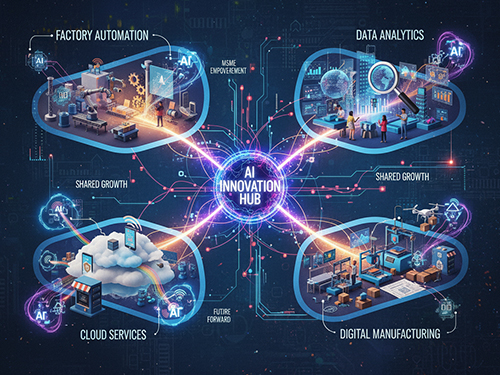
5. Spill-over Benefits for MSMEs and Startups When large-scale compute and connectivity become locally available, smaller enterprises can take advantage in these ways: • Develop AI-powered products or services (using local infrastructure) at lower cost and latency. • Utilize cloud-based tools, data-analytics, machine-learning models that earlier required expensive overseas setups. • Participate in new value-chains: for instance, manufacturing cooling-systems for datacentres, power-grid equipment, fibre installation services, local O&M. • Attract global customers: once infrastructure is world-class, Indian firms can service clients globally with less friction.
What the Hub Looks Like on the Ground • The facility will be a gigawatt-scale data centre campus, which means massive compute power, large server farms, many GPUs/TPUs, and huge infrastructure for cooling, power supply and data movement. • A new international subsea gateway will land in Visakhapatnam, connecting the hub with global data-cables and reducing latency for South-Asia and Indian regions. • Co-investment in clean energy sources, transmission lines and energy-storage systems. Google’s announcement emphasises sustainability – integrating green power and making the hub future-ready.
Challenges and Considerations
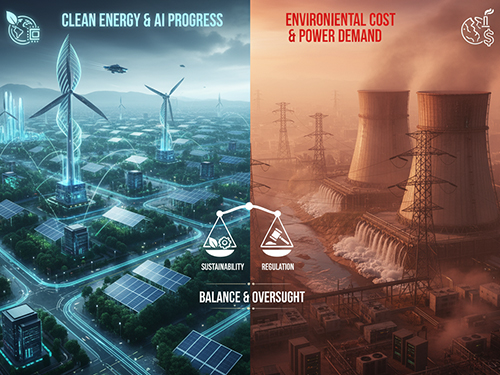
While the investment is monumental, it comes with responsibilities and challenges: • Power & Cooling Requirements: High-performance AI infrastructure consumes enormous power – data centres generate heat, need reliable cooling and stable electricity. Ensuring renewable energy at scale will be critical. • Environmental Sustainability: As India ramps up data-centres, questions of water usage (for cooling), land use, and carbon footprint arise. The hub’s green-energy elements will need rigorous execution. • Skill & Talent Availability: For the jobs promised to materialise, local education, training and skilling ecosystems must keep pace. The gap between infrastructure and available talent may delay benefits. • Inclusive Growth: While large projects often cluster in metro/special zones, broad inclusion of smaller towns and MSMEs in the value-chain will determine how wide the benefit spreads. • Policy & Incentives Balance: States will compete for large expansions; ensuring sustainability of incentives and avoiding a race-to-the-bottom will be important.
What This Means for You (Businesses, Founders & Stakeholders)
Founders & Startups: If your venture uses AI, cloud, big data or video/graphics processing – this hub means you may access local services, reduced latency, lower cost and stronger reliability.
MSMEs & Service Providers: Opportunity knocked – there will be demand for local suppliers of infrastructure: fibre-optic installers, power-grid contractors, cooling systems, server maintenance, data-centre logistics.
State & Local Governments: States like Andhra Pradesh set a template for how infrastructure, policy-ease and global tech partnerships can attract mega-investments. For other states, this raises the bar.
Consumers & Society: As compute power grows, applications improve: better AI services (in language-processing, local-language AI, cloud apps), lower latency for gaming, video, enterprise solutions – technology moves closer to Indian homes and offices.
Conclusion: A New Chapter Begins
Google’s $15 billion AI hub in Andhra Pradesh isn’t just a big investment – it is a symbol of India’s evolving role in the global tech ecosystem. It signals that India is ready not just to consume technology, but to host, build and export it.
For businesses large and small, this is a chance to ride the next wave of digital growth. For regions, a path to leapfrog into the future. And for India, a step closer to becoming a global AI pioneer.
The infrastructure will take time. The compute will be built. But the vision is clear: when the world’s largest tech stacks anchor here, the landscape of opportunity for India’s innovators, enterprises and workforce changes forever.








Leave a Reply