

Cross-Industry Collaboration Networks: A Strategic Growth Engine for 2025

Business collaboration used to mean joining forces with similar businesses to share resources or audiences. In 2025, the most successful companies are doing something more strategic – forging cross-industry collaboration networks that combine distinct capabilities to co-create new offerings, enter untapped markets, and unlock exponential growth.
These collaborations transcend traditional sectors – such as a tech firm partnering with a health services provider, or a logistics company teaming up with an agritech platform – to form hybrid value models that are greater than the sum of their parts.
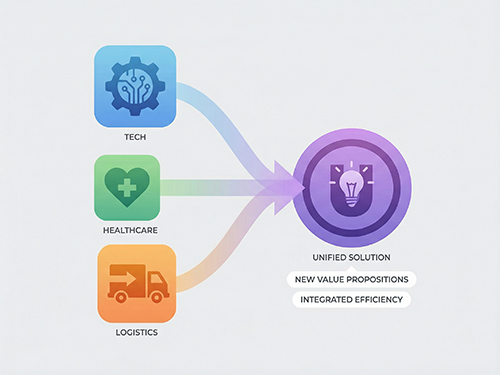
1. What Are Cross-Industry Collaboration Networks?
Cross-industry collaborations are strategic partnerships between businesses from different sectors or ecosystems – leveraging each other’s strengths to deliver new or enhanced products, services, technology solutions, or access to markets.
Examples include:
- Tech & Healthcare – AI health monitoring + medical services.
- Fintech & Retail – embedded payments + loyalty programs.
- Logistics & E-commerce – real-time delivery analytics.
- EdTech & HR Services – skill certification + job placement.
- AgriTech & Sustainability Platforms – climate-smart agriculture solutions.
This type of collaboration transforms how value is created and delivered.
2. Why Cross-Industry Collaboration Is a Top Trend in 2025
a) Accelerating Innovation
Blending expertise from different sectors leads to breakthrough ideas and hybrid products.
b) Market Expansion Beyond Core Segments
Partnering across industries helps access new customer bases without building from scratch.
c) Shared Risk & Resource Optimization
Combining infrastructure, customer data, and capabilities reduces individual risk.
d) Enhanced Customer Experience
Integration across services simplifies user journeys – e.g., bundled healthcare + financial planning + insurance.
e) Tech Integration Drives Synergy
APIs, data platforms and cloud ecosystems make cross-sector integration seamless and scalable.


3. Models of Cross-Industry Collaboration in 2025
i) Co-Branding Initiatives
Two brands from different sectors jointly launch offerings – e.g., a fitness brand + a health tech app.
ii) Joint Ventures (JV) on Innovation Platforms
Companies create a new venture to solve industry-specific or cross-sector challenges.
iii) Shared Data Ecosystems
Partners share anonymized data to derive insights that benefit all stakeholders.
iv) Mutual Referral & Value-Exchange Partnerships
Companies exchange customer referrals and bundled services to increase lifetime value.
v) Platform-to-Platform Integrations
Software and tech companies collaborate via APIs to enhance functionalities across user bases.
These models deliver sustainable advantage when aligned with strategic goals.
4. How Businesses Can Build Effective Cross-Industry Networks
- Map Core Competencies & Gaps
Identify what your business does best – and what you lack. - Look for Complementary Partners
True synergy comes from partners ‘different but complementary’, not direct competitors. - Define Clear Value Exchange
Understand not just what you give, but the measurable value you get. - Legal & Strategic Frameworks First
Collaborations must be governed by agreements that clarify IP, revenue share, data rights, risk share. - Pilot First, Scale Later
Start with smaller pilot projects to validate assumptions before full rollout.
A guided strategic framework increases success rates in collaborations.
Leave a Reply