

AI-Ready Legal Documentation: Why Your Business Needs Smart Contracts & Policies in 2025
Artificial Intelligence is no longer futuristic – it’s embedded deep into business workflows. From chatbots to automated analytics to recommendation engines, AI systems generate value but also legal complexity. Traditional contracts and legal templates are often inadequate to handle questions like:
- Who owns AI-generated output?
- What liability exists for AI mistakes?
- How is user data processed and protected?
- What happens when AI decisions impact customers or employees?
In 2025, AI-Ready Legal Documentation is fast becoming a must-have for any business that uses AI – whether built in-house or integrated via third-party tools.
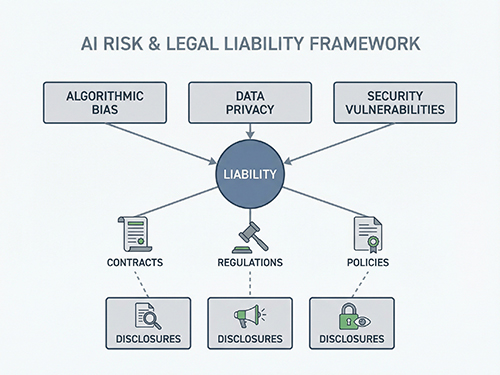
1. What Does “AI-Ready Legal Documentation” Mean?
AI-Ready Legal Documentation means drafting contracts and policies that explicitly address:
- AI governance & accountability.
- Data collection, use, storage & deletion policies.
- Liability for AI outcomes & automated decisions.
- Third-party AI tool integrations.
- User consent & transparency disclosures.
- Audit rights and ethical standards.
These documents go beyond generic language – they build legal clarity around the risks and benefits of AI systems in business operations.
2. Why AI-Ready Documentation Is Critical in 2025
a) Rapid Adoption of AI Across Business Functions
AI is now part of customer support, HR onboarding, finance analytics, marketing personalization, and more. Each use case carries legal implications.
b) Regulatory Focus on AI Accountability
Data protection, algorithmic fairness, and ethics frameworks are becoming law in many jurisdictions – requiring documentation that reflects these standards.
c) Increasing AI-Related Disputes
From bias disputes to automated errors, businesses without clear legal terms face costly disputes and reputation risk.
d) Third-Party AI Integrations Create Contract Complexities
When integrating SaaS or API-based AI tools, businesses need clauses on data use, uptime, security, indemnity, and compliance.
e) Cross-Border Data & AI Regulations
Operating globally means navigating GDPR, digital service liabilities, data transfer rules, and local AI governance policies – all requiring precise documentation.

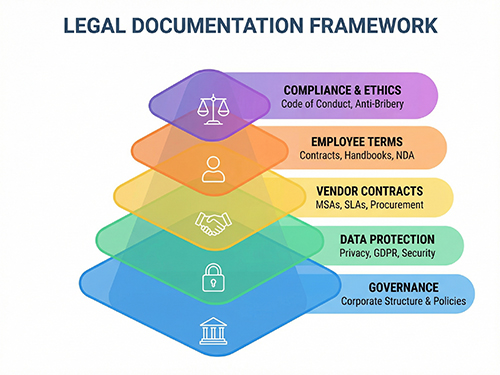
3. Key Legal Documents Businesses Need in the AI Era
i) AI Governance Policy
Defines how AI systems are approved, monitored, and audited.
ii) AI Usage & Compliance Contract Clauses
Inserted into vendor/client agreements to manage AI risks and responsibilities.
iii) Data Protection & Consent Policies
Combines data privacy with AI-specific data usage disclosures.
iv)Algorithmic Accountability & Ethics Terms
Outlines bias mitigation, decision traceability, and audit rights.
v) Third-Party AI Vendor Agreements
Covers data rights, security standards, indemnity, SLA/uptime and breaches.
vi) AI-Integrated Employee Agreements
Employee use of internal AI tools requires documentation on monitoring, IP ownership, and ethical use.
Each of these requires bespoke legal language tailored to your business model and AI use cases.
4. How Professional Legal Documentation Services Help
At BOW, we help businesses by providing:
- AI-Ready Contract Drafting & Review.
- Data & AI Compliance Policy Formation.
- Risk Allocation & Liability Clauses.
- Third-Party AI Integration Legal Advisory.
- Cross-Border AI Regulation Navigation.
- Ethics & Accountability Legal Frameworks.
- Continuous Updates with Evolving Law.
This ensures your contracts and policies stay relevant, enforceable, and future-proof.
Conclusion
In 2025, AI is not “optional” – it’s woven into business operations. With that comes legal complexity. Organizations that adopt AI-ready legal documentation will be better protected, more compliant, and able to unlock AI value with confidence.
Future-proof your legal framework today – contact BOW for expert documentation services tailored for the AI era.
Leave a Reply