

Decentralized B2B Exchange Ecosystems: How Blockchain & Smart Contracts Are Transforming Business Exchanges in 2025
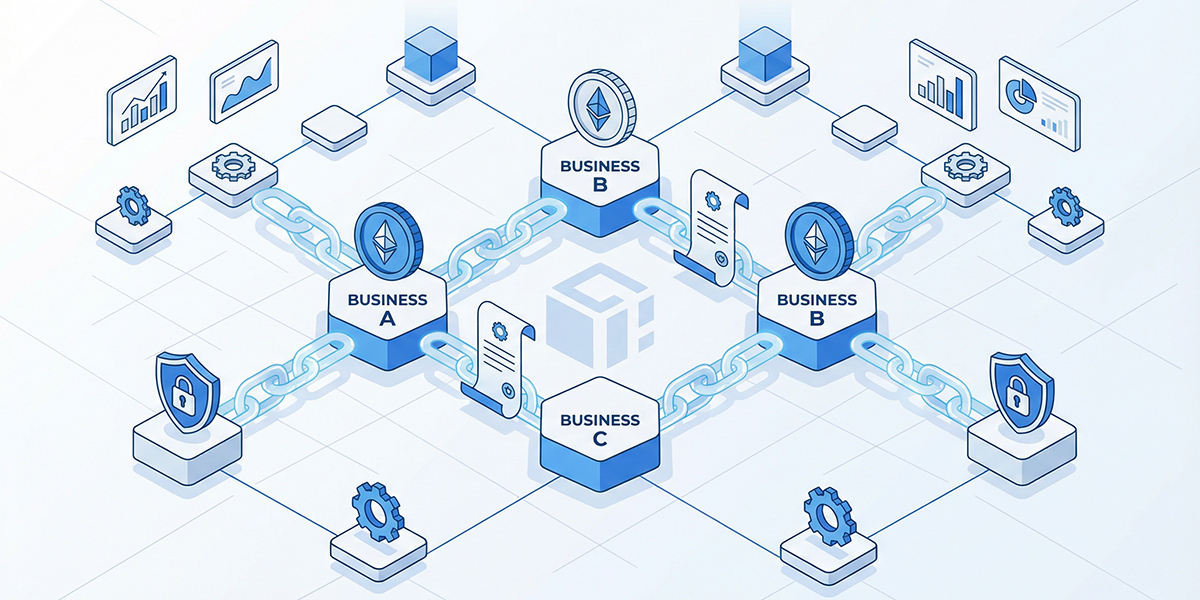
As B2B commerce evolves, traditional exchange models (manual agreements, slow reconciliations, trust issues, delayed settlements) are increasingly inefficient. In 2025, decentralized exchange ecosystems – powered by blockchain, smart contracts and tokenized transactions – offer a new paradigm: trustless, transparent, real-time business exchanges.
No more waiting on manual approvals, lengthy reconciliations, or opaque records. Blockchain’s immutable ledger plus automated contractual enforcement (smart contracts) enables businesses to exchange goods, services, data, and payment in a seamless, secure environment.
1. What Are Decentralized B2B Exchange Ecosystems?
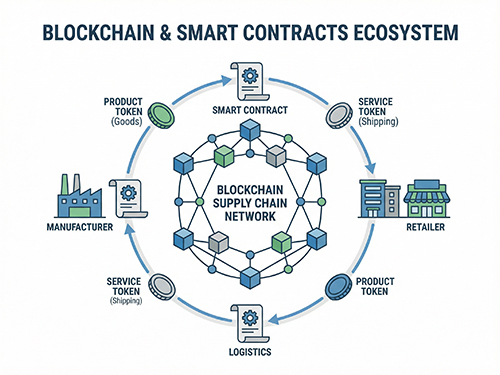
Decentralized B2B exchange ecosystems are networks where businesses transact directly with one another through blockchain-enabled platforms that use:
- Smart contracts – automate enforcement and settlement when predefined conditions are met.
- Tokenized value exchange – digital tokens represent goods, services, credits, or assets.
- Immutable transaction records – tamper-proof history for audits and compliance.
- Interoperability across partners – no central authority, peer-to-peer trust.
- Real-time settlement & tracking – reduce latency and reconciliation costs.
This digital ecosystem is ideal for industries like supply chain, logistics, data marketplaces, service credits, and nontraditional asset exchanges.
2. Why This Is Trending in 2025
a) Blockchain Maturity Meets Real-World Business Needs
Blockchains are no longer experimental – enterprises are adopting hybrid permissioned chains for secure exchange.
b) Trust & Transparency Are Business Imperatives
Immutable ledgers reduce disputes, fraud risk, and reconciliation overhead.
c) Automated Execution Reduces Costs
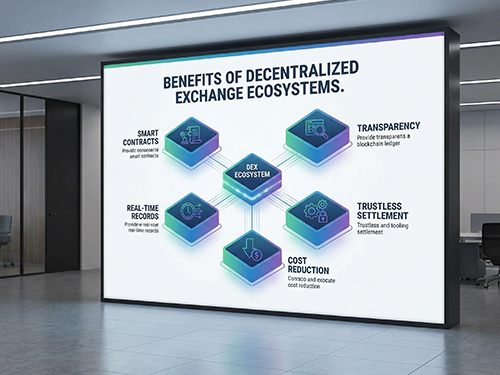
Smart contracts cut out intermediaries, speeding up settlements and reducing legal overhead.
d) Tokenization Unlocks New Value Models
Assets, service credits, loyalty points, and even intellectual assets can be tokenized for exchange.
e) Cross-Industry Demand for Secure Digital Integration
Supply chains, finance, healthcare, data services, and professional services increasingly need secure, real-time exchange platforms.
3. Key Features of Decentralized B2B Exchanges
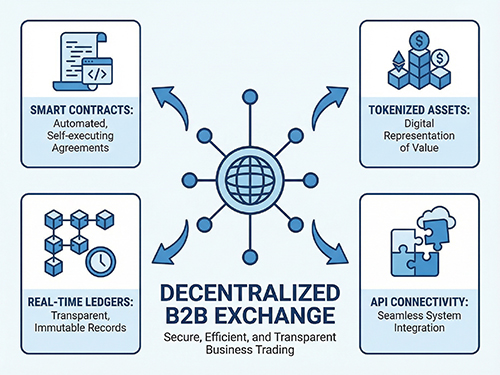
i) Smart Contract-Driven Transactions
Business logic is encoded so that once conditions are verified, agreements self-execute.
ii) Tokenized Asset Exchange
Physical or digital assets represented by tokens that can be traded, tracked, and settled.
iii) Permissioned Blockchain Networks
Controlled access with privacy protections for participating enterprises.
iv) Real-Time Ledger & Reporting
Live updates on transactions, settlements, and compliance metrics.
v) Interoperability APIs
Seamless integration with ERP, CRM, accounting, and compliance systems.
These features create a trustless exchange environment – meaning participants don’t need to trust each other; they trust the protocol.
4. Real-World Use Cases (2025)
- Supply Chain Exchanges
Manufacturers exchange verified delivery credits, stock queues, logistics tokens with smart settlement. - Data Monetization Networks
Companies trade anonymized data sets using secure tokens – with automated privacy compliance. - Service Credit Marketplaces
Consulting hours, software credits, maintenance services tokenized and exchanged. - Loyalty & Reward Exchanges
Cross-brand loyalty points traded or redeemed across verified B2B networks. - Digital Asset Exchange Platforms
IP usage credits, software licenses, digital workflows exchanged with full audit trails.
These use cases unlock new revenue streams and operational efficiencies.
5. How BOW Supports Decentralized B2B Exchange Adoption
BOW provides end-to-end support including:
- Ecosystem design & partner matching.
- Legal and smart contract advisory.
- Integration with accounting/ERP systems.
- Tokenization strategy & compliance checks.
- Security & governance frameworks.
- Ongoing support & governance audits.
With BOW, businesses don’t just join exchanges – they build strategic exchange networks.
Conclusion
Decentralized B2B exchange ecosystems are not just a tech fad – they’re becoming a practical, strategic platform for secure, transparent, and automated inter-business transactions. As 2025 unfolds, companies that embrace this trend can unlock new value, reduce risk, and collaborate at scale – without intermediaries.
Leave a Reply