Predictive Business Registration: The Smart Way Entrepreneurs Are Choosing the Right Structure in 2025
Until a few years ago, business registration was a straightforward but confusing process-entrepreneurs had to decide their structure based on incomplete knowledge or generic advice. But in 2025, a new trend is transforming the Indian business setup landscape: Predictive Business Registration, powered by AI-driven business modelling tools.
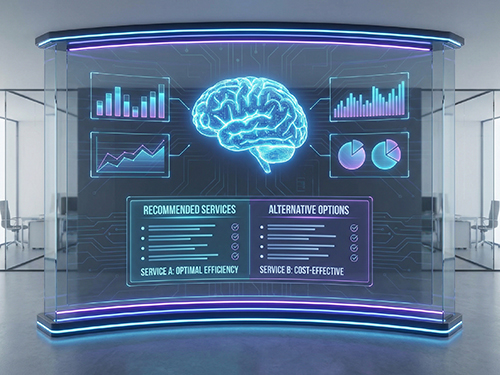
These tools analyze an entrepreneur’s idea, risk appetite, financial goals, scalability needs, and operational patterns to recommend the right business structure even before starting. This ensures that businesses start on a stronger legal and financial foundation.
1. What Is Predictive Business Registration? Predictive Business Registration uses AI algorithms to evaluate:
Founder profile.
Nature of business.
Scalability prediction.
Compliance tolerance.
Tax strategy suitability.
Investment potential.
Industry risks.
Based on analysis, the AI tool recommends:
Optimal business structure.
Required registrations.
Future compliance requirements.
Documentation readiness.
Possible risk scenarios.
This avoids wrong structuring decisions that often lead to tax issues, restructuring costs, or compliance penalties later.
2. Why This Trend Is Growing in 2025 a) Increasing Entrepreneur Awareness Founders now understand that the wrong structure can block funding, partnerships, or tax benefits. They want accurate, data-backed decisions. b) Complexity in Modern Business Models Subscription-based, hybrid, platform-driven, and AI-driven startups need customized structuring-something AI can analyze better than generic templates. c) Rise of Compliance Automation With automated compliance dashboards becoming the norm, businesses want registration aligned with long-term automation compatibility. d) Government Push Toward Predictive Compliances India’s move toward pre-emptive compliance systems encourages registration choices that minimize future regulatory friction. e) Business Formalization Surge More entrepreneurs enter the formal economy, demanding informed and strategic registration.
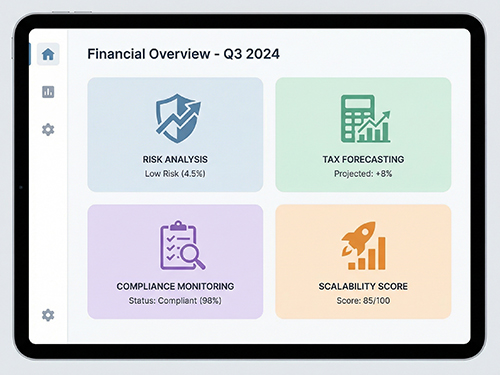
3. Key Features of Predictive Business Registration Tools i) Risk-Based Structure Recommendation Entrepreneurs receive structure suggestions based on liability, industry risk, and revenue projections. ii) Document Prediction Engine AI lists all documents required-even before the process begins. iii) Scalability Score Systems predict future expansion needs and suggest the most scalable structure. iv) Tax Outcome Forecasting Tools simulate tax outcomes for different structures over 3–5 years. v) Compliance Load Estimation Users see the compliance burden for each structure (monthly, quarterly, annually). vi) Investment Readiness Indicator Startups get structure suggestions suited for VC or angel funding.
This makes business registration not just a paperwork step but a strategic decision.
4. How This Helps Entrepreneurs and SMEs
Saves money by avoiding restructuring later.
Eliminates confusion among similar-sounding structures.
Ensures compliance from day one.
Attracts investors with structured legal planning.
Reduces incorporation delays.
Improves business sustainability through accurate forecasts.
Startups with proper predictive registration show higher scaling success and fewer legal interruptions.
Conclusion Predictive Business Registration is becoming a game-changer in 2025. With AI-driven insights, entrepreneurs no longer guess their way into the business world-they make smart, data-backed decisions that protect their future. Platforms like BOW streamline the entire journey by combining advisory, documentation, and registration assistance into a single organized system, ensuring businesses start with clarity and confidence.








Leave a Reply